


TL;DR
Personal GTM Highlight: Last week at SaaS Summit Benelux, I shared why the next wave of growth in 2026 won’t come from doing more, it’ll come from doing better. After scaling Personio Benelux past $10M ARR without new markets or headcount, the lesson is clear: efficiency compounds faster than activity.
GTM OS Agent Update: André Bressel built one of the most powerful revenue automations we’ve seen, an n8n + GPT workflow that extracts SPICED insights from every sales call and syncs them directly into HubSpot. No more missed notes, no more manual data entry. Just structured deal intelligence, 10+ hours saved per rep, and full-funnel visibility.
Playbook of the Week: 7 Strategies to Execute GTM by Doing Better. A complete 2026-ready efficiency system built around signal-based GTM, ICP focus, process-led scale, AI-native workflows, and continuous governance, turning growth from fragmented activity into integrated, predictable throughput.
Why It Matters: Every GTM team is feeling the same pressure: less budget, more accountability. This issue gives you tested systems and examples to extract higher yield from your existing GTM motion and grow smarter, not bigger, in 2026.
Last week’s personal GTM Highlight: Do BETTER before you do MORE
Read time: 4–5 min
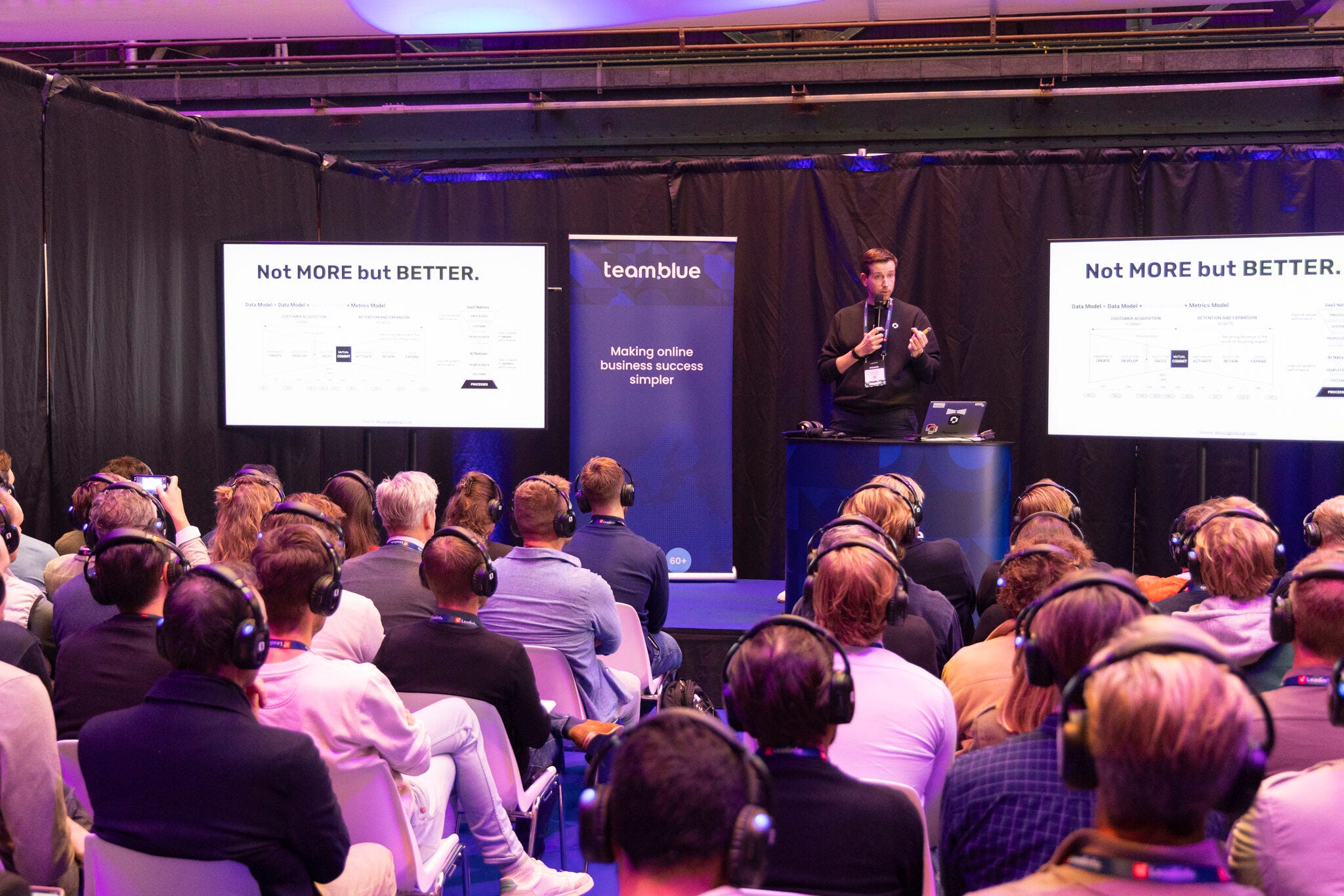
Last week, I was invited to speak during the SaaS Summit Benelux on how to do BETTER not MORE in 2026 (ead more here).
Every founder and revenue leader I speak with is deep in 2026 planning. Most start with the same question:
“How do we add more pipeline?”
More ads, more SDRs, another market, another campaign.
That is stage one: Do More.
It works early, but it scales linearly. It burns cash, energy, and attention.
When growth stalls, the answer is not “more.” It is “better.”
Over the last three years at Personio, we proved that point.
We grew past $10M ARR in Benelux not by adding markets or headcount but by fixing our fundamentals.
That is stage two: Do Better.
Now, as we plan for 2026, our focus is to master stage two and prepare for stage three: Grow Smarter.
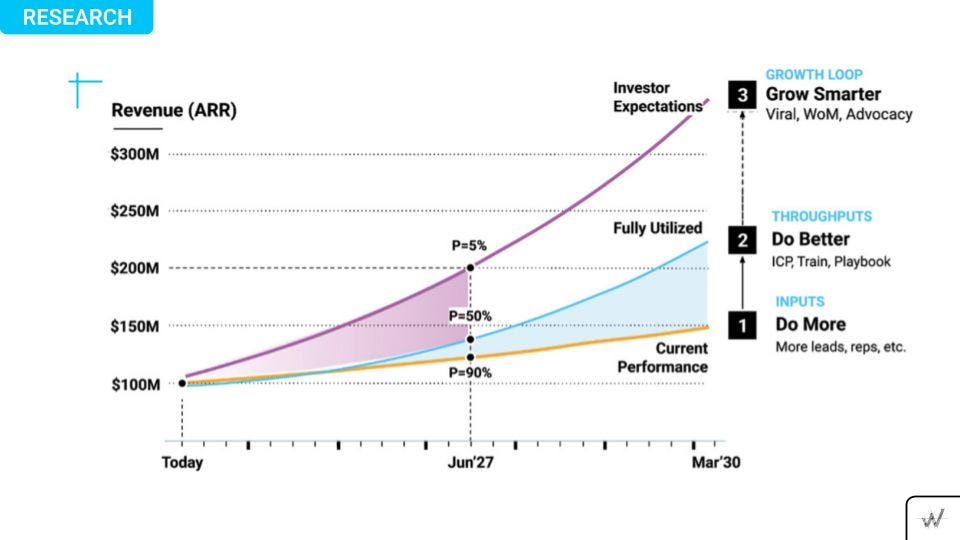
Stage 1: Do More
You grow through inputs: more leads, more reps, more spend.
It is necessary early on to find market signal and validate motion fit.
But once CAC rises and win rates flatten, the system is leaking.
Adding fuel only hides inefficiency.
Stage 2: Do Better
This stage turns your GTM motion from activity-based to efficiency-based.
You stop scaling noise and start improving throughput.
Here are the five fundamentals that changed everything for us at Personio Benelux:
Focus beats volume.
We stopped splitting attention across markets and doubled down on the Netherlands until we could prove real traction.
Tip: Pick one market, one segment, or one motion and win it before expanding.ICP discipline.
We trimmed our ICP until it hurt. Fewer opportunities, higher win rates, happier customers.
Tip: Review your last 10 deals. Which customers renew and expand easily? That is your real ICP.Cross-functional clarity.
Marketing, Sales, and CS aligned on one system and one language. Misalignment is expensive.
Action tip: Map your full customer journey once as one team. No handoffs. Just shared ownership.Process creates scale.
We invested in better systems and operating rhythm instead of more headcount.
Tip: Before hiring, ask if a process, automation, or clearer metric could solve the problem first.Retention is growth.
Retaining customers and people compounds. The same trust that drives renewals keeps your best talent too.
Tip: Build your next playbook around existing customers and high-performing people, not just new pipeline.
None of this was glamorous. It was slow, systematic work.
But it compounded.
So if you are planning for next year and wondering how to grow in a tougher market, start by asking a simpler question:
Where can we do better, before we try to do more?
Stage 3: Grow Smarter
Once efficiency compounds, growth shifts from process-driven to ecosystem-driven.
Customers, partners, and product start creating self-sustaining loops.
Growth comes from:
Word of mouth and advocacy.
Expansion and referrals.
Community-led and partner-led motions.
To prepare for stage three, build advocacy systems now:
Track referral sources, reward customer storytelling, and design programs that turn success into acquisition.
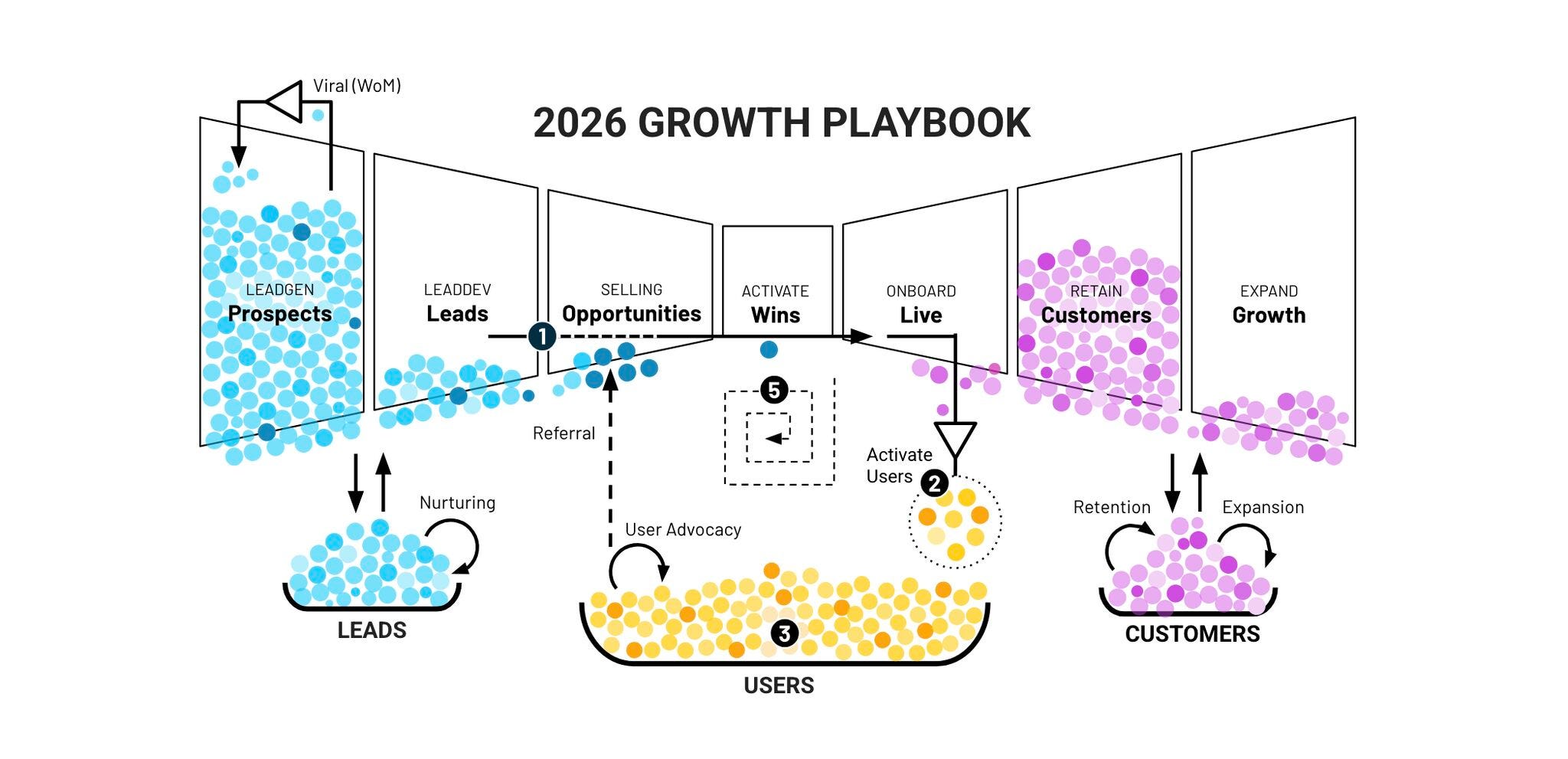
Why this matters:
Every GTM system lives in one of these three stages.
Most teams are stuck in “Do More.” The best operators are mastering “Do Better.”
And the next generation of market leaders will “Grow Smarter.”
If you only do one thing this quarter:
Identify your current stage, then choose one focus:
If you’re in Stage 1: Simplify and measure. Stop adding. Start optimizing.
If you’re in Stage 2: Build compounding systems: referrals, advocacy, community.
If you’re entering Stage 3: Codify what makes customers talk about you and scale it intentionally.
Key takeaway:
You do not need new channels to grow.
You need to move up a stage.
GTM OS Agent Update: From Notes to Intelligence: Automating SPICED at Scale
Read time: 3 min
This week inside GTM OS, we highlight the craft of my partner-in-crime, André Bressel, who built one of the most practical automation workflows I’ve seen in modern revenue operations.
Problem:
Every sales conversation hides critical insights about the buyer’s situation, pain, impact, critical event, and decision process.
But most of that intelligence is lost in call transcripts that no one reviews.
We know the drill: everyone runs SPICED or MEDDIC in theory. In practice, only 20 percent of deals have structured notes.
Solution:
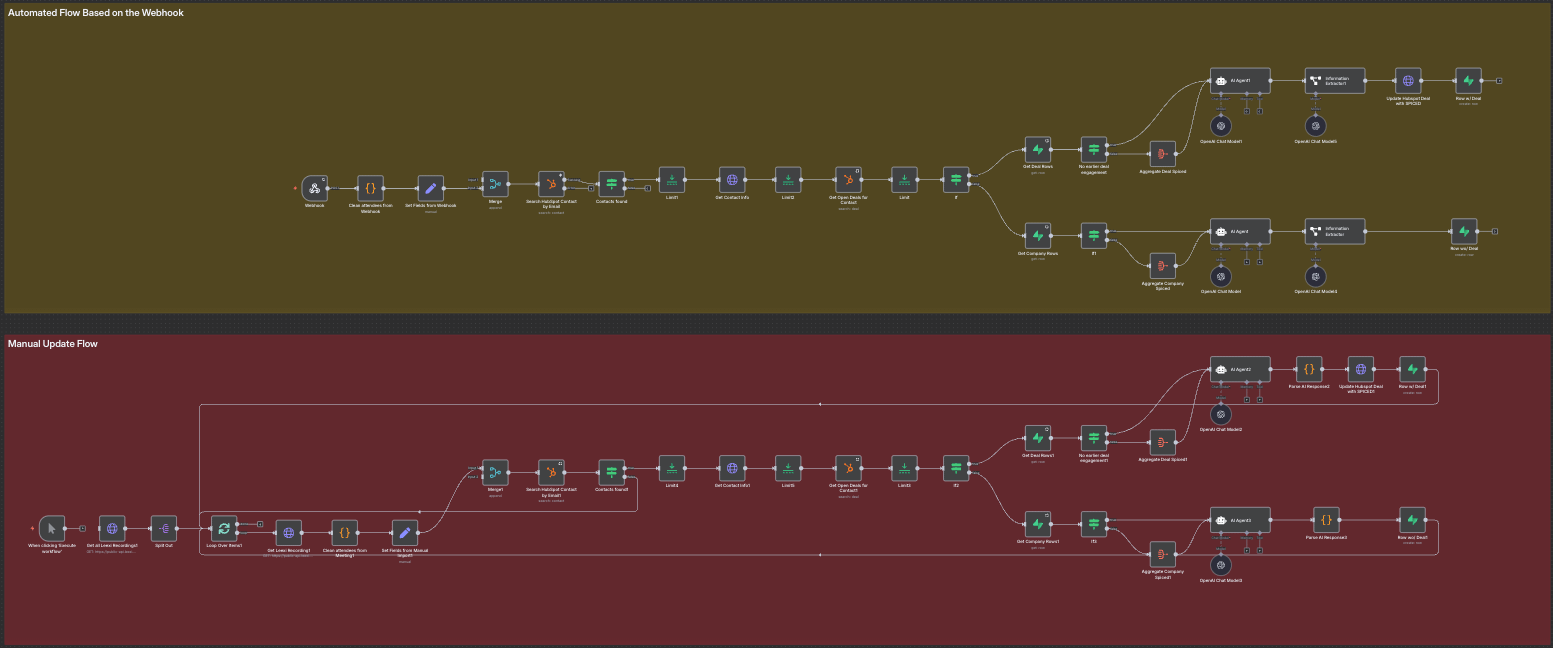
André built an n8n-based workflow that automatically extracts SPICED insights from every sales meeting, validates them through GPT, and pushes the results directly into HubSpot.
No manual note-taking. No data gaps. No “tribal knowledge.”
The workflow operates in two modes:
Real-time: Meeting ends, transcript triggers analysis, SPICED notes appear in HubSpot within minutes.
Batch mode: Historical calls or backfill data processed on demand for complete visibility.
Results:
10 hours saved per rep each week
100% SPICED coverage across all calls
Instant deal context for reps and managers
Historical analysis for RevOps to spot what drives wins, what predicts churn
Why this matters:
This is stage two work in action.
Instead of adding tools or headcount, André increased system efficiency.
The workflow doesn’t just automate data entry, it turns every conversation into structured intelligence.
Key design principle:
Store live insights in the CRM for execution.
Store historical intelligence in the data warehouse for pattern recognition.
This dual-layer design creates compounding value across Sales, CS, and Product.
If you only do one thing:
Audit your own deal data flow.
Ask:
Where is intelligence getting lost between call, CRM, and enablement?
Which manual steps could be replaced with structured automation?
Do we have one unified source of truth between reps and RevOps?
Why it fits GTM OS:
The future of revenue operations isn’t reporting; it’s live operational intelligence.
And this workflow shows exactly how to build it.
Read André’s full breakdown → Revenue Roots

7 Strategies to Execute GTM by Doing Better
Read time: 20–22 minutes
Challenge: The 2026 SaaS market has shifted from “growth at all costs” to “profitable growth only.” Yet most GTM teams still operate linear systems built for activity, not yield: tracking volume instead of throughput and leaking revenue through inefficiency, silos, and lack of operational clarity.
Impact: This creates structural growth drag: CAC rising faster than ARR, win rates flattening, and payback periods stretching beyond 18 months. Teams that master efficiency instead see pipeline-to-revenue conversion improve 25–30%, CAC drop 20%, and NRR exceed 110%, compounding gains through focus, data quality, and execution discipline.
Solution: Build a structured GTM Efficiency System anchored in seven interconnected strategies. From signal detection to system governance that move teams from fragmented activity to integrated, predictable, and self-compounding execution.
1. Signal-Based GTM and Buying Readiness Systems
Why this matters:
In 2026, over 80% of GTM budgets are still spent converting accounts that are not ready to buy. Signal-based orchestration allows lean teams to focus effort on high-readiness accounts, cutting CAC and improving throughput.
How to execute it well:
[ ] Step 1: Integrate product usage, intent, and firmographic signals into a unified readiness model.
[ ] Step 2: Define “in-market” thresholds using behavioral data instead of MQL scoring.
[ ] Step 3: Automate routing and outreach only for readiness-qualified accounts.
[ ] Step 4: Analyze closed-lost data monthly to recalibrate signals.
[ ] Step 5: Align GTM and Finance on cost-per-qualified-opportunity benchmarks.
[ ] Step 6: Run controlled experiments to validate model ROI.
[ ] Step 7: Refresh signal definitions quarterly.
What Good Looks Like:
Pipeline-to-revenue conversion improved by 25–35%
Deal velocity improved by 20%
Lower CAC per opportunity by 15–20%
Common Mistakes & Fixes:
Mistake: High activity mistaken for readiness → Fix: Use multi-signal models combining fit, intent, and timing.
Mistake: Static lead scoring → Fix: Retrain and validate models quarterly.
Mistake: Fragmented tools → Fix: Centralize data and routing workflows.
Expert Sources:
Chris Walker, Signal-Based GTM Efficiency, LinkedIn Source, GTM OS Notion Database
Kyle Poyar, This Data Should Be a Wake-Up Call for GTM Teams, LinkedIn Source
2. ICP Discipline and Market Focus
Why this matters:
Expansion fatigue kills efficiency. In 2026, precision beats spread. Teams that concentrate on a narrow ICP outperform by achieving higher win rates, faster payback, and better retention.
How to execute it well:
[ ] Step 1: Audit top 20 customers by retention and expansion probability.
[ ] Step 2: Rank ICPs by lifetime value and renewal likelihood.
[ ] Step 3: Eliminate fringe segments and reallocate spend.
[ ] Step 4: Align all messaging and enablement to the refined ICP.
[ ] Step 5: Integrate ICP fit into lead routing logic.
[ ] Step 6: Review ICP accuracy quarterly.
[ ] Step 7: Enforce ICP discipline via pipeline governance.
What Good Looks Like:
90% of opportunities within ICP boundaries
20% higher win rate, 30% lower churn
CAC payback under 12 months
Common Mistakes & Fixes:
Mistake: Expanding ICP too early → Fix: Maintain focus until NRR >110%.
Mistake: ICP defined only by firmographics → Fix: Include behavior and use-case.
Mistake: Sales exceptions dilute ICP → Fix: Make ICP adherence part of quota credit rules.
Expert Sources:
Winning by Design, Doing More Isn’t Working Anymore, LinkedIn Source, GTM OS Notion Database
Jacco van der Kooij, Your Guide to GTM Efficiency, LinkedIn Source, GTM OS Notion Database
3. Unified GTM Efficiency Dashboard and Revenue Architecture
Why this matters:
2026 GTM organizations win through visibility, not volume. Cross-functional dashboards unify GTM, Ops, and Finance into one system of truth and prevent misaligned growth spending.
How to execute it well:
[ ] Step 1: Merge CRM, billing, and finance data into a single data warehouse.
[ ] Step 2: Define core efficiency metrics (CAC Efficiency, Pipeline Velocity, NRR).
[ ] Step 3: Build dashboards accessible to all GTM leaders.
[ ] Step 4: Run weekly reviews linking spend to yield.
[ ] Step 5: Benchmark motions by cost per $1 ARR.
[ ] Step 6: Enable AI-based anomaly alerts.
[ ] Step 7: Govern performance through a GTM Efficiency Council.
What Good Looks Like:
Shared visibility across Finance, Ops, and GTM
Predictable efficiency improvement quarter-over-quarter
CAC efficiency and ROI directly tracked in dashboards
Common Mistakes & Fixes:
Mistake: Fragmented metrics → Fix: One unified data schema
Mistake: Static dashboards → Fix: Automate updates
Mistake: No accountability → Fix: Include Finance in GTM efficiency governance
Expert Sources:
Chris Walker, Fixing GTM Efficiency, LinkedIn Source, GTM OS Notion Database
David Spitz, SaaS GTM Benchmarks, LinkedIn Source, GTM OS Notion Database
