The 90-second version
Count the objections your last 20 late-stage deals deferred before you rewrite the pitch. Most teams have never counted them.
Give every video 1 job before you record it. Validate the idea on LinkedIn first, then extend it.
Design the pilot the buyer keeps even if they walk, with a 3-week box and a decision date.
Today is 14 October. Turn the Q4 outbound plan into a capacity plan: 48 weekdays left, a last first touch on Friday 4 December, 2 dates per target.
The European read: count public holidays per country, not per team. The thread: count what is real before you spend it.
Read time: ~10 min

This week’s number 1 move
Pull your last 20 deals that reached Selection, where buyers compare vendors, and log each objection. Mark each one resolved, deferred or never said.
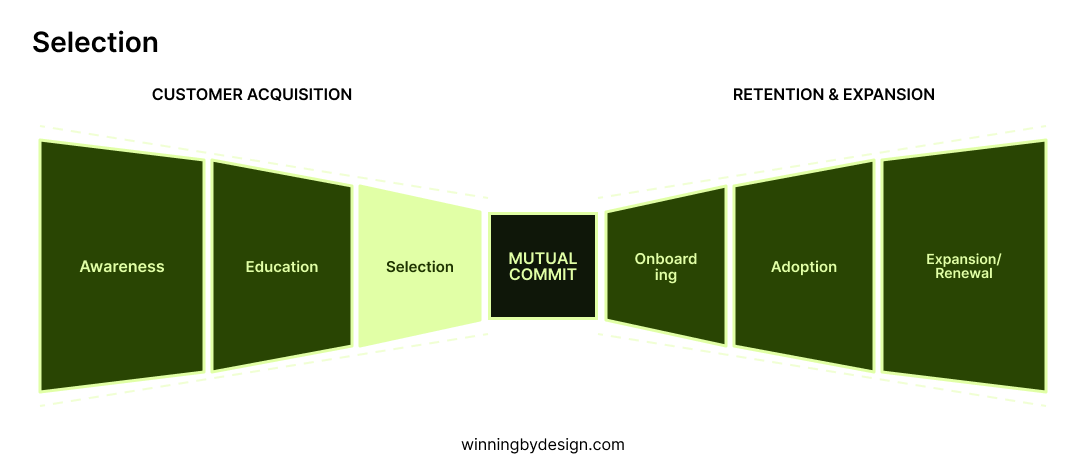
Deferred objections are the real lost deals. Your CRM shows them later as a reason code that says timing. Divide resolved by raised. That is your objection resolution rate, and most teams have never counted it.
Resolved means the buyer said so. A nod is deferred.
Then write one card for your top 5 objections. Each row holds the objection in the buyer’s words, the sentence you say first, the proof the pilot shows by week 2, and a line that asks if it is resolved. Patrick Forquer, CRO at Legora, calls his version 8 Mile: disarm a competitive objection by naming the competitor’s move first. The GTMnow write-up gives the principle, not the mechanics. Armand Farrokh adds the posture: agree the buyer made a real choice before you handle it.
From my week: as I wrote on Monday, a director asked me how we differ from the local competitors. I could defend the answer without being too salesy, because I had posted what we stand for on LinkedIn that same week.
My take: I would not rewrite the pitch first. I would count what the buyer parked. I would treat a parked objection as a risk before a spoken one, and resolved needs the buyer’s words, not my read of the room. Log an objection only when the buyer confirms it in a sentence.
Do first: export the last 20 deals that reached Selection, list each objection in the buyer’s words, tag it, and divide. Founder fallback: your last 10 calls, from notes or a recording, in 1 afternoon.
The rule: you cannot raise a rate you never counted. Count the deferred objections before you touch the pitch.
Sources: GTMnow (Sophie Buonassisi with Patrick Forquer), “How Legora Went From $3.5M to $200M+ ARR in Just 2 Years” (6 October 2026) · 30 Minutes to President’s Club (Armand Farrokh), “We Already Have A Vendor for that Objection” (September 2025)
The play: 5 steps to design a pilot the buyer keeps and say the objection first. 20 deals, 5 objections, 1 pilot brief, 1 decision date.

Hi, it is Koen Stam and welcome to GTMcraft OS: The European GTM Operator. This newsletter is built from 100,000+ GTM signals collected from 100+ operators and founders, combined with 13+ years of my own lessons and failures from the trenches. I write at the intersection of go-to-market practice and AI-powered systems for founders and GTM operators scaling their next 2M, 5M or 10M ARR.
Problem 1: your next video has no job to do
From my week: in a post in March 2025 I wrote that the best founders would teach rather than sell. A post that teaches still needs one door behind it. For a video, that door is the job you name first.
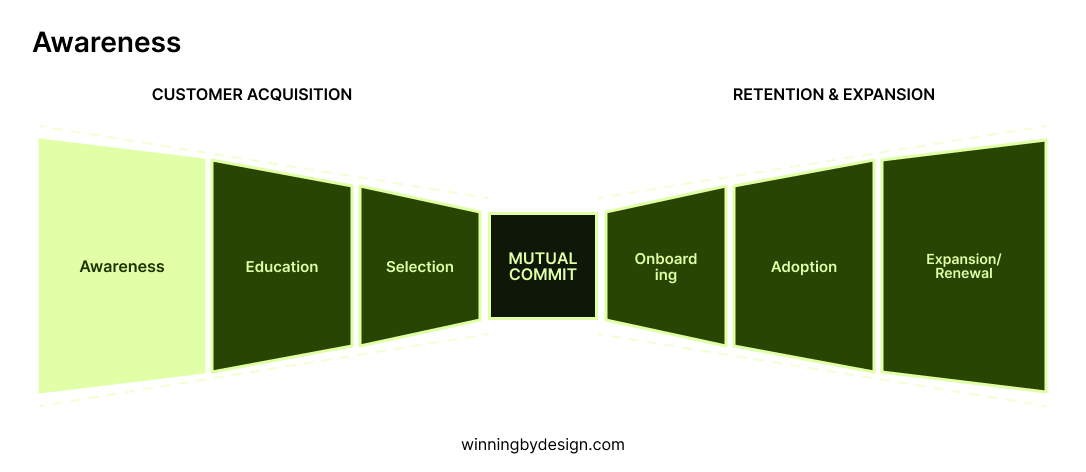
In B2B, 1 view can equal 1 customer, writes Pierre Herubel in his 9 October edition on YouTube. So the first decision is the job, not the topic. He names 3 jobs: build a funnel, reinforce your authority, or sell directly with a link to buy or book. Do not sell directly in every video.
Then the order of work. Most teams write long, then chop it short. Herubel does the reverse: he tests an idea on LinkedIn, and when it performs, he extends it into a long video and a newsletter. One idea validated this way became a video with 61,000 views, thousands of email subscribers and a USD 100K product. He sells his own course. Read the 61,000 as proof of the order, not as your target.
The rest is craft. Write the title and thumbnail before the script. Give 5% of the topic in the video and 95% in a guide made for it. Put the main call to action at 20 to 30% of the video, because people leave.
The Founder-Led Marketing Show adds scale. Owner.com, far above your size, compared 2 videos with the same title and thumbnail: 100,000 views against 3,400. Its process runs brand strategy into topics into script flow, and its CEO spent 10 hours every Saturday producing videos. Take the process. Leave the budget.
My take: I do not need every tactic. Herubel lists many, and I take 3: the job, the order and the guide. Everything else is polish. A video with no job is content. A video with a job is a pipeline asset. I would count booked calls, not views, and cut a video I love if I cannot say what it is for.
The European read: your video crosses borders for free. Your guide does not. Write it in the buyer’s language for your first 2 markets, and keep the form to 1 question.
Do first: list your last 5 videos or long posts and write the one job of each: funnel, authority or direct sell. Founder fallback: the same list from your own channel, 20 minutes, no marketer needed.
Do this week: take the post from the last 90 days that earned the most replies and booked calls, not likes. Write its video title and thumbnail before any script. Founder fallback: the post a customer mentioned.
Do this month: record 1 video with 1 job, a guide that holds the other 95%, a call to action at 20 to 30% and a 1-question form. Publish before 20 November, so the 30-day count of booked calls lands before the holidays.
The rule: 1 objective per video, chosen before you record, with 1 door behind it.
You know it worked when: every video you publish has its job written next to it, and booked calls from video is a number you report. Founder read: your last 5 videos each have a job in 1 line.
The play: 5 steps to turn your content into booked calls with one front-end offer.

Sources: Pierre’s Content Guides (Pierre Herubel), “How to get leads from YouTube in B2B” (9 October 2026) · The Founder-Led Marketing Show (Finn Thormeier with David Fallarme), “Owner.com’s Youtube & Founder Brand Playbook” (6 October 2026) · Koen Stam, LinkedIn, “The best founders in 2025 won’t sell. They’ll teach.” (15 March 2025)
Problem 2: your pilot leaves the buyer nothing to defend
From my week: on 16 September I posted that I relaunched an internal agent pilot with the same technology and a different job description, and that the reception inside the team flipped. I had no results to report yet.
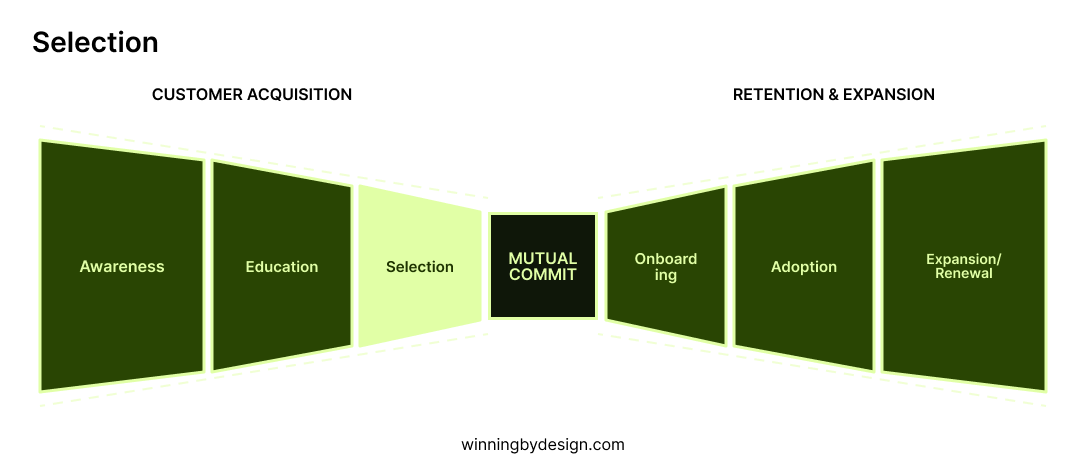
Most pilots end when the license ends. The buyer has no work to show internally and every reason to wait. Nobody says no. They say let us regroup.
Patrick Forquer describes the opposite at Legora, where revenue went from USD 3.5M to over USD 100M in about a year, then doubled in under 6 months. The pilot gives the customer the IP, the integrations and the workflow docs to keep, converted or not. Almost nobody buys without trying first, so the worst case is a customer who learned the category on your time.
Scale that down. Legora sells a new category into law firms at a size far above yours, so leave its hiring ratio of 2 post-sale people per pre-sale person. Take the shape: start with simple use cases that drive fast ROI, then move into complex workflows.
Check the counter-case. Ron Johnson, who built the first Apple Store, turned down a scaled-down test because it would have proved nothing and buried the idea. If your product only shows its value at full scale, a pilot can kill the deal. Then say so in the pitch.
My take: a pilot sells like a job description. In September I changed the job of an internal pilot, not the technology, and the reception flipped. For a pilot I would design, I would first write what the buyer keeps before kickoff, set 3 criteria I am confident to hit, box it at 3 weeks and put the decision date in both calendars on day 1. Keep means the work product built in the pilot. Product code and license stay with the seller. A no-decision is the worst outcome, so a date decides. If they walk, they still get the keep pack.
The European read: in a European enterprise deal the keep pack passes through procurement and data protection. Agree the data terms for the pilot before kickoff, or week 1 goes to paperwork.
Do first: write the keep list for your next pilot: what the buyer keeps, what you keep. Founder fallback: 1 page for your next pilot, 30 minutes.
Do this week: write the pilot brief: first use case, 3 criteria at most, a 3-week box, a decision date and 1 owner for week 1. Send it to your next pilot buyer. Founder fallback: you are the owner, so block the hours.
Do this month: run the objection card at kickoff and midpoint, log each objection the same day, and hand over the keep pack on the decision date, win or walk. Founder fallback: a Notion table.
The rule: a pilot ends in a decision or a named blocker, and the buyer holds the work either way.
You know it worked when: pilots end on the planned date with a yes, a no or a named blocker, and objection resolution rate is a number you report each month. Founder read: your next pilot has a decision date in both calendars.
The play: 5 steps to design a pilot the buyer keeps and say the objection first.

Sources: GTMnow (Sophie Buonassisi with Patrick Forquer), “How Legora Went From $3.5M to $200M+ ARR in Just 2 Years” (6 October 2026) · Make It Happen (John Barrows with Ron Johnson), “How Steve Jobs Built the Apple Store” (21 September 2026) · Koen Stam, LinkedIn, “Earlier this month I relaunched a pilot that half of my feed says is dead” (16 September 2026)
Problem 3: your Q4 outbound plan counts days your team does not have
From my week: I am off this week, 5 weekdays out of my own Q4. My last day before leaving was a run of 1:1s to keep things in motion. My rule: leave goes on the capacity sheet first, mine included.
Q4 has 66 weekdays on paper: 22 in October, 21 in November, 23 in December. Your outbound team does not have 66 days to prospect. Elric Legloire at Outbound Kitchen starts by removing 21 to 31 December, which is 9 weekdays. His baseline is 57 selling days, before leave, local holidays and internal days. From today, 48 remain until Friday 18 December.
Then the plan becomes capacity. Say 5 fully ramped SDRs each deliver 12 attended demos a month: 180 for Q4. Show rate is the share of booked meetings that happen. At 70%, 180 demos need about 257 bookings. At 60%, they need 300. Run the sum on your own Q3 number.
Now the rep gap, in his example. Rep A booked 22 meetings, a 0.79% call-to-meeting rate. Rep C booked 8 at 0.44%. At Rep C’s call volume, matching 0.79% gives about 14 meetings, 6 more. That is a near-2X lever for 1 rep, not 14 extra meetings. And it is not a verdict. Legloire checks in order: effort, knowledge, skills, whether your coaching transfers, then the system around the rep.
Last, give every monthly target 2 dates: booked by and held by. Otherwise November bookings hide an empty December calendar. Review every Friday and write 1 change for next week.
He admits: last October was his team’s biggest pipeline month ever, and he does not credit the planner alone.
My take: a rep gap is a question, not a verdict, and my own coaching is the first thing I check. Count the selling days on your own Q4 calendar this week, starting with your own leave.
The European read: count public holidays per country, not per team. 11 November is a Wednesday this year and a holiday in Belgium and France. 8 December is a Tuesday and a holiday in Austria, Italy and Spain. A rep in each country is a day short.
Do first: count selling days per rep from today to 18 December: weekdays, minus leave, local holidays and internal days. Founder fallback: your own days and 1 rep’s, in a sheet, 45 minutes.
Do this week: put the same Q3 numbers beside every rep: accounts worked, contacts reached, meetings booked, conversion and show rate. Size the lever, then run the 5 checks in order. Hold the first Friday review on 16 October, 15 minutes, even alone. Founder fallback: your best month beside your worst. A spreadsheet runs the arithmetic. You own the assumptions.
Do this month: measure the median selling days from first touch to held demo, name your last first touch for a Q4 demo, and give each month a book-by and a held-by count. Founder fallback: a 10-row sheet, 20 minutes.
The rule: no activity target goes up until the days, the bottleneck and the accounts are written down.
You know it worked when: team selling days remaining is a number everyone can quote, and each month shows a book-by and a held-by count. Founder read: you can say how many selling days you personally have left to 18 December.
The play: 5 steps to turn your outbound Q4 plan into a capacity plan.

Sources: Outbound Kitchen (Elric Legloire), “Your 5-step system for outbound Q4” (8 October 2026)
Save this for the week you plan December. Send it to 1 operator who still splits the Q4 target by 3
Also on the radar
3 plays that sit next to the 3 moves, rather than adding a fourth.
The video needs a budget line. Split demand spend between brand and capture.
5 steps to split demand budget between brand and capture, and cut the middleThe quiet number in your capacity plan: the share of booked meetings that happen.
5 steps to increase your outbound meeting-booked and held rateThe step before the pilot. A demo that earns the next step.
5 steps to run a demo that advances the deal
Steal this move: cut the dead deals your forecast still counts in 4 weeks

Your pilot dates and capacity plan feed the commit. This play cleans what it already counts.
Fixes: a commit that counts deals which stopped moving months ago and still read green.
Best for: 5-20M ARR teams that commit a number every week. Founders run it on their live deals.
The 5 steps (over 4 weeks):
Week 1, set the line. Take the median days-to-close of your won deals over 2 quarters. Double it. That is your death line, and a deal older than it is dead in place.
Week 2, strip it. Pull every open deal past the line out of the commit and total the value.
Week 3, re-forecast the survivors, weighted by stage age times velocity.
Week 3, move stripped deals to a dated re-engage lane. Do not delete them.
Week 4, re-age the pipeline every Monday and report the stripped total next to the commit.
Template: one row per open deal: segment, age in days, past the death line (Y or N), in the commit (Y or N), keep or strip. Totals: padded number, stripped number, gap.
Paste this into your AI:
Here is my closed-won export and my open pipeline: [paste]. Set my death line at twice the median days-to-close of won deals, strip every open deal past it, and re-forecast the survivors weighted by stage age times velocity. Show me the gap between my padded number and my honest one.
Why this matters now
Today is 14 October. Q4 has 48 weekdays left before 21 December, before leave. If your cycle from first touch to held demo is 10 selling days, the last first touch that can still make a Q4 demo lands on Friday 4 December, 7 weeks from now.
After that date, every first touch is Q1 pipeline. Plan it as Q1, in writing, before Friday 16 October.
3 questions for the room
What is the 1 job of each of your last 5 videos, and who wrote it down?
What did the buyer keep from your last pilot, and which objection did they carry out unsaid?
How many selling days does your outbound team have left to 18 December, and what is your last first-touch date?
Join The Revenue Room
8 people, 1 quarter. European B2B SaaS founders between 1M and 10M ARR and GTM leaders who own the number. I tell you what I would do in your seat, you run it. No course, no content library, nothing to fall behind on.
A hotline. A private group nobody outside it sees. Post the problem that is on your desk, any working day, and you have my answer within 48 hours, plus whatever the other 7 have run into before. You never solve a complex one alone again.
A 90-minute call every 2 weeks, case-led. You post your case 48 hours ahead, 3 cases get the floor, and I tell you what I would do, stop doing and measure by Friday. Next call you come back with what happened and we keep solving problems together.
1 private 60-minute session with me, placed where it moves your number most.
I have scaled B2B SaaS to 10M ARR 3 times now and I run a GTM org pushing toward 40M ARR, in Europe. You get what I am running this quarter, not what I remember from 2019.
Master your human GTM skills AI can’t replace inside GTMcraft,
Koen
Your (human) GTM Coach
—
PS. Co-written by Wispr + 3 GTMcraft Skills + Claude Opus 5.5; edited & approved by Koen