The 90-second version
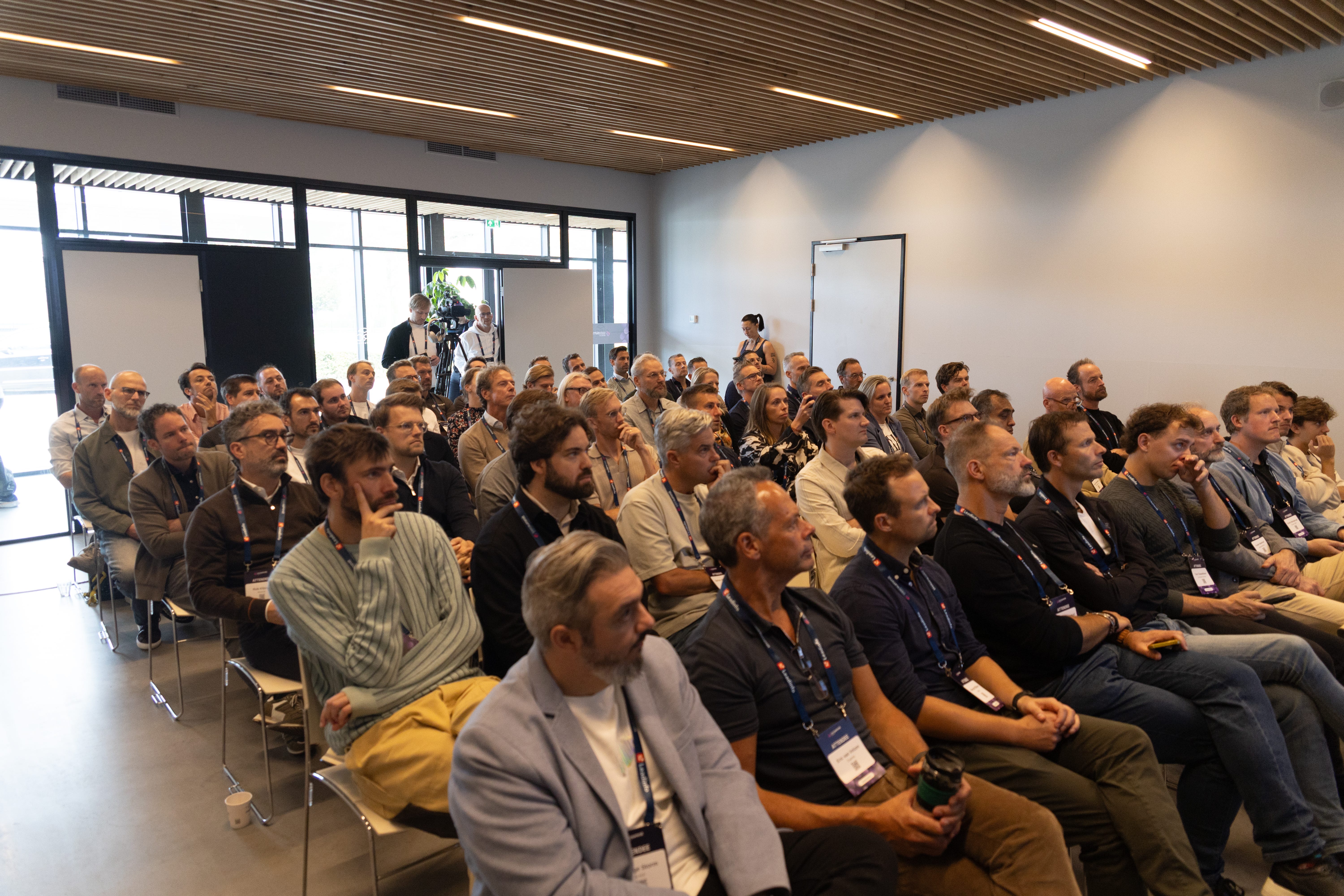
I asked 60+ founders and operators last week to keep a hand up if they knew where their pipeline breaks. 1 hand stayed up.
12 months ago I told the story of our road to 10M ARR and left out that our pipeline was stalling. Across 2025 it fell from 2.5M a quarter to 1.9M.
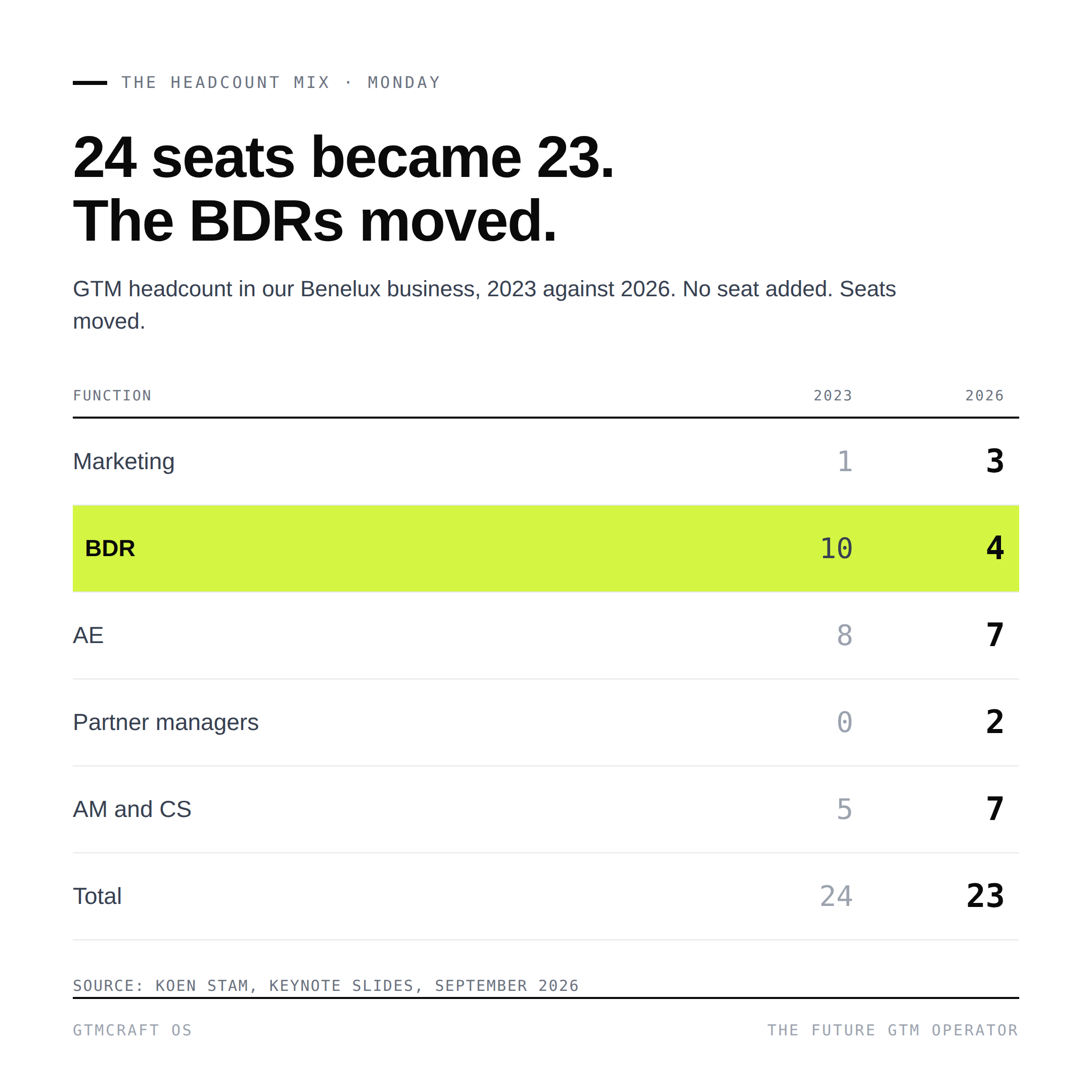
I did not hire my way out. 24 GTM seats became 23: BDRs went from 10 to 4, marketing from 1 to 3, partners from 0 to 2.
The European read: in small markets you run out of top of funnel fast, so conversion is the only lever that scales across 3 or 4 countries at once.
The thread: pipeline mix follows headcount mix, and conversion decides whether it pays.
Read time: ~8 min

60+ operators in the room, 51 months to 24, 24 seats to 23, 10 BDRs to 4, 1 hand still up
Q3 closes on Wednesday.
This week, in a lot of companies, a quarter review will end with the same request. Pipeline is soft, so add 2 BDRs.
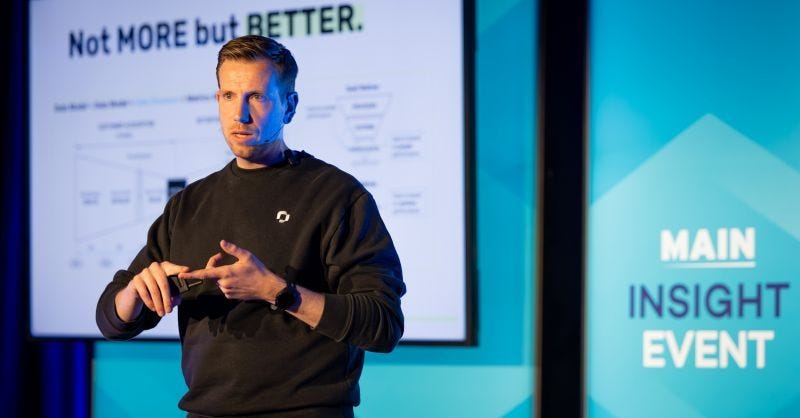
Last Wednesday I stood in front of 60+ founders and operators and showed them what we did instead, with every number on the screen.
Hi, it is Koen Stam and welcome to GTMcraft OS: The European GTM Operator. This newsletter is built from 100,000+ GTM signals collected from 100+ operators and founders, combined with 13+ years of my own lessons and failures from the trenches. I write at the intersection of go-to-market practice and AI-powered systems for founders and GTM operators scaling their next 2M, 5M or 10M ARR.
Lesson 1: I told the good story and left out the pipeline
12 months ago I stood on the same stage and told the story of how we grew our Benelux business from 2M to 10M+ ARR in about 4 years.
It was a true story. It was also incomplete.
What I did not say: our pipeline was already stalling. Across 2025 it slid from 2.5M in Q1 to 1.9M in Q4. Pipeline is my number 1 problem for next year. It was my number 1 problem 3 years ago too.
So this year I opened with it. I asked the room to raise a hand if pipeline is their number 1 problem in 2026. Fewer hands than I expected.
Then the second question. Keep it up if you know where in your motion your pipeline actually breaks.
1 hand stayed up.
That second question is the whole lesson. A stalling pipeline is a symptom. The reflex is to pour volume into the top: more BDRs, more budget, more initiatives. Plays that worked in 2023 do not work in 2026, and AI is not going to fix 2027 on its own either.
My take: I no longer treat pipeline as a top-of-funnel problem. On a mid-market motion the next 2M comes from conversion across the whole journey: discovery to win, win to live, live to renewal and expansion. Every point of conversion I gain lowers the pressure on the top. I have not solved it. My Q4 is tight and I will say so. What changed is the first question I ask. Not where do I get more pipeline. Where does ours leak.
The European read: in a smaller market your addressable list is finite. A country with a few thousand accounts in your ICP does not refill because you hired 2 more BDRs. Conversion is the lever that works in all your markets at once.
Do first: write your funnel as conversion rates from first touch to expansion and circle the 1 rate that moved most against you in the last 4 quarters. Founder fallback: 4 numbers from your CRM, lead to meeting, meeting to opportunity, opportunity to won, won to renewed.
Do this week: put that 1 rate on your Q4 kick-off agenda instead of a volume target. No kick-off? Make it the first line of your Monday pipeline read.
Do this month: run 1 fix against that stage for 4 weeks and measure that rate only.
The rule: before you add volume to the top, find the stage where your pipeline breaks. A leak does not close because you pour faster.
You know it worked when: the circled rate moves by week 4 and your top-of-funnel target can come down while the revenue target stays. Founder read: you can name your leaking stage in 1 sentence.
The play: 7 expert tactics to increase revenue by doing better. Works the stages after the opportunity opens, which is where the cheapest pipeline gain sits.

Lesson 2: I moved seats before I added any
In 2023 our team was built for the old SaaS days. 24 people. 1 in marketing. 10 BDRs. 8 AEs. 0 partner managers. 5 in account management and customer success. Around 70% of BDR and AE effort pointed at SMB.
Growth at all cost was the setting. It was a good year. It would not survive the next one.
I did not add headcount. I moved it.
First I pulled BDR seats into marketing: a marketing lead, a content creator and an event manager. Two years ago I did it again, this time into partnerships.
We also cut focus. SMB in the Netherlands first. Mid-market in the Netherlands next. Belgium and Luxembourg later. We said no out loud.
Today the team is 23 people. Marketing 3. BDRs 4. AEs 7. Partner managers 2. Account management and customer success 7. BDR effort on SMB is down to about 25%, AE effort to about 40%.
1 fewer seat. A different company underneath it.
My take: the fastest pipeline decision I made was not a hire. It was a transfer. Every BDR seat I moved cost meetings booked in the short term. What it bought were channels that convert at 38% and 50% instead of 12%. I am not telling you BDRs are finished. I still run 4, front-loaded with AI so they spend their hours calling. But when pipeline stalls now, my first question is which seat sits in the wrong place, not which seat is missing.
The European read: with notice periods of 1 to 3 months, a new seat is a 2-quarter bet before it produces anything. A moved seat is a 1-month bet. It is the fastest capacity lever you actually control.
Do first: list every GTM seat by function and by the segment it points at. Founder fallback: 6 people means 6 names with 1 segment next to each.
Do this week: mark the seat whose output converts worst per euro. That is a transfer candidate, not a firing candidate.
Do this month: move 1 seat, or 1 day a week of 1 seat, into your best-converting channel, then hold the rest still for a quarter.
The rule: move a seat before you add one. Your headcount mix is your pipeline mix, 2 quarters later.
24 seats became 23. The BDR row did the moving.
You know it worked when: pipeline per GTM head rises while headcount stays flat. Founder read: a channel you did not run a year ago shows up in your last 10 opportunities.
The play: 5 steps to add output without adding headcount. Gives you the audit for which seat to move and what to stop while you move it.

Lesson 3: the channel that did not exist converts best
As the seats moved, the channel mix moved with them.
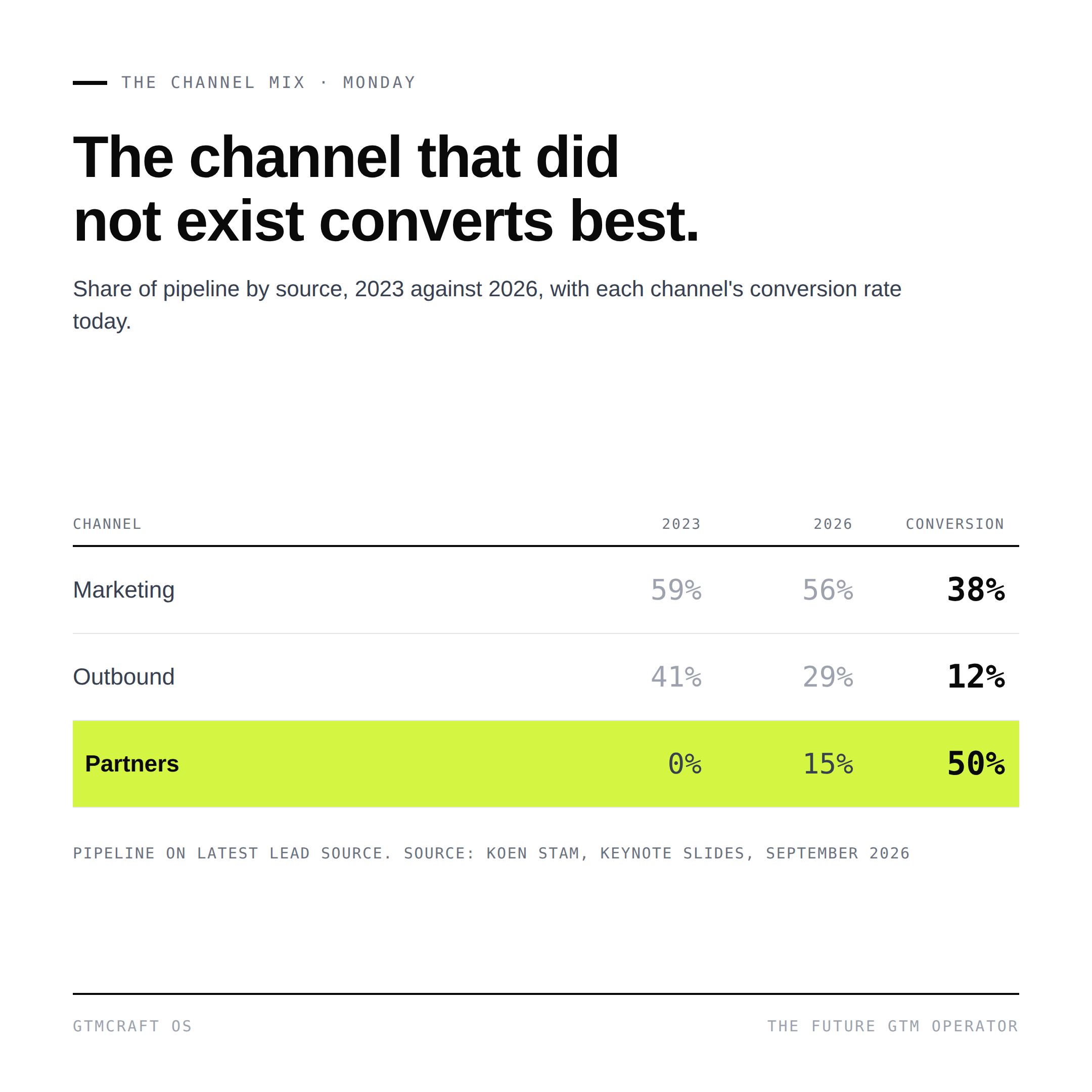
In 2023, pipeline came 59% from marketing, 41% from outbound, 0% from partners. Now it is 56% marketing, 29% outbound, 15% partners. That is on latest lead source, which undercounts partners.
Then the conversion rate per channel. Marketing 38%. Outbound 12%. Partners 50%.
The channel that was zero 3 years ago converts about 4 times better than outbound.
That is why the revenue flipped. Revenue went from 66% SMB, 34% mid-market, 0% enterprise to 35%, 32% and 33%. Pipeline followed: SMB from 49% to 31%, enterprise from 20% to 39%.
Efficiency moved with it. Win rate from 17% to 25%+. CAC, counted in months, from 51 to 24. NRR from 96% to 102%.
Now what did not work. None of it happened overnight, and we switched on too many pipeline initiatives along the way. Mid-market is still less stable than SMB, which remains our most predictable motion. NRR is a fight in a market full of AI point solutions. And I would move the first partner seat a year earlier if I ran it again.
My take: the lesson is not that partners are good and outbound is bad. Outbound still carries 29% of pipeline and it is where many enterprise names start. The lesson is that I fund channels by what they convert, not by how much they produce. On latest lead source, partner pipeline is the best money in the building, and it is still under-counted. The expensive pipeline is the pipeline that looks great in volume and closes at 12%.
The European read: a local partner carries trust across a border that a cold sequence cannot. In a country where nobody knows you, a payroll or advisory partner has already met your next customer. That is the fastest route into a second market.
Do first: pull the last 4 quarters of pipeline by source and put the conversion rate next to each. Founder fallback: tag your last 20 opportunities by source by hand.
Do this week: rank channels by conversion, not volume, and put the ranking in front of whoever owns the budget.
Do this month: move 10% of next quarter’s spend or time from your worst converter to your best.
The rule: fund channels on what they convert, never on what they produce. Volume from a 12% channel is the most expensive pipeline you own.
Pipeline share and conversion by channel. The partner row was 0% three years ago.
You know it worked when: blended conversion rises within 2 quarters while pipeline volume holds. Founder read: your best-converting source has a named owner.
The play: The partner ecosystem GTM playbook: drive pipeline and closed-won revenue. The build order for a channel you have been running by accident.

Save this. 3 lessons from my week as a European operator, each with a play you can run today.
Send it to 1 founder or GTM operator whose marketing and sales teams are graded on different numbers.
This week’s play to steal
All 3 lessons are about the same thing: which room the work happens in. The cheapest room I have is the one we already pay rent on. When I came into my first market here, nobody knew us outside a small circle. There was no marketing motion and no partner motion. I had an office, and I went looking for the partners my buyers already trusted. That is the play I would run before Christmas.
Play: The events and community system, pipeline in the room
Fixes: events that fill a room and produce no tracked pipeline, because nobody wrote down which open deals and customers were there, or who owns the next step.
Best for: 2-10M and 10-25M teams selling mid-market across more than 1 market, with an office or a proud customer in each market and no event budget to speak of.
The 5 steps (over 4 weeks):
Week 1, pick the room you already pay for: your office, or a customer’s who will host.
Week 1, pick a topic your buyers already argue about, and 1 partner their audience trusts more than they trust you. Low agenda, no pitch.
Week 2, before invites go out, list the open opportunities and customers you want in the room, with an owner per name.
Week 3, run it. The same day, write the pipeline-in-the-room document: which opportunities, which customers, who owns each next step.
Week 4, review that document in the next deal review, with marketing present. Compare stage movement on those deals against the rest.
Template: one row per account in the room. Columns: open opportunity yes or no, stage, owner, next step, date. Any open deal with no next step by the end of the day is the follow-up you already lost.
Paste this into your AI:
Here is the attendee list from my last event with company names and titles: [paste]. Here is my open pipeline export: [paste]. Match the two, list every open opportunity and existing customer that was in the room, and draft 1 next step per account for the named owner. Flag the accounts where nobody from my team spoke to them.

Why this matters now
Q4 starts on 1 October. The number you close by Christmas is sitting in your pipeline today, and a large share of it will go quiet at least once.
Three weeks before quarter-end is the wrong time to discover marketing had no job on those deals, or that 2 departments were arguing about credit while the buyer drifted.
Move the friction into a room now, while it is cheap.
3 questions for the room
Which of your quiet deals would move if your marketer owned 1 committee member on it?
When did your last credit argument happen in a forecast call instead of a review?
If your regional leaders met every 2 weeks, what problem would surface first?
Go deeper with GTMcraft OS
Scale on plays and skills, not prompts.
You do not need another newsletter, podcast or LinkedIn post.
You need the system under it.
Read the plays. Every single play is free and live in GTMcraft OS on Notion. Click through from any edition.
Build your own. GTMcraft OS members connect the full libraries, 100+ plays plus 100,000+ LinkedIn, newsletter and podcast signals, straight into their own AI or Claude context, so their team builds on the whole corpus instead of one-off prompts.
The single plays are free to read. Wiring the whole corpus into your own operating system, and keeping it current, is what the membership gives you.
Master your human GTM skills AI can’t replace inside GTMcraft,
Koen
Your (human) GTM Coach
—
PS. Co-written by Wispr + 3 GTMcraft Skills + Claude Opus 5; edited & approved by Koen